
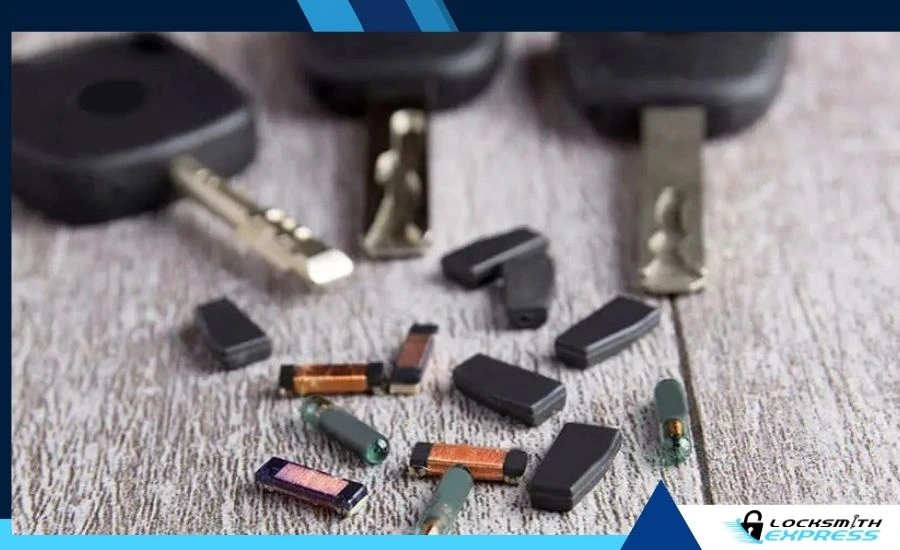
If you've ever wondered, "What is a transponder key?" you're in the right place. A transponder key is a car key that features an internal RFID chip, which helps prevent theft. This chip communicates with your car's anti-theft system, and it is the only thing that gives your engine permission to start.
If you have a modern car, you have likely noticed the key has a thick plastic head instead of being all-metal. That plastic shell holds the transponder chip.
- How Transponder Keys Prevent Theft
- Identifying Your Transponder Key
- The Difference Between Transponder, Remote Fob, and Smart Key
- Common Problems and Troubleshooting
- Options for Transponder Key Replacement
- Can you program a key yourself?
- Spare Keys vs. "All Keys Lost" Replacement
- Your Professional Key Experts
- Frequently Asked Questions
- Can you bypass a transponder key?
- What is the difference between fixed code and rolling code transponders?
- Will a dead car battery erase my transponder key?
- Can a transponder key be duplicated at a hardware store?
- If my remote buttons are broken, do I need a whole new key?
This article explains how this security system works, how to identify your key, what to do if it fails, and your options for car key replacement.
How Transponder Keys Prevent Theft
A transponder key prevents theft by sending a unique code from the key's RFID chip to the car's immobilizer. This anti-theft system has three main parts. The first is the transponder chip in the key, which holds a special code.
The second is the transceiver, which is an antenna ring located around your ignition. The third is the car's immobilizer, which is part of the main computer.
When you turn the key, the transceiver powers the chip. The chip then sends its code back to the transceiver. The immobilizer checks if the code is correct. If the code matches, the engine starts. If the code is wrong or missing, the immobilizer shuts off the fuel pump and ignition. This is why a simple cut key cannot start the car.
Identifying Your Transponder Key
You can tell you have a transponder key with a few signs. Most cars made after 1998 have this technology, so if your car is newer, it likely has a car key with a chip.
Here are the main ways to check:
- Look at the key head: A transponder key has a thick plastic head to hold the chip. An older, all-metal key does not have a chip.
- Check the manufacturing date: Most cars made after 1998 have this technology.
- Test a copied key: A hardware store can cut the metal blade. That cut key will only unlock the doors, but it will not start the engine.
This technology is often confused with remote fobs and smart keys, but they serve different purposes.
The Difference Between Transponder, Remote Fob, and Smart Key
A transponder chip's primary function is to start the car, while a remote fob unlocks the doors, and a smart key offers keyless push-to-start functionality.
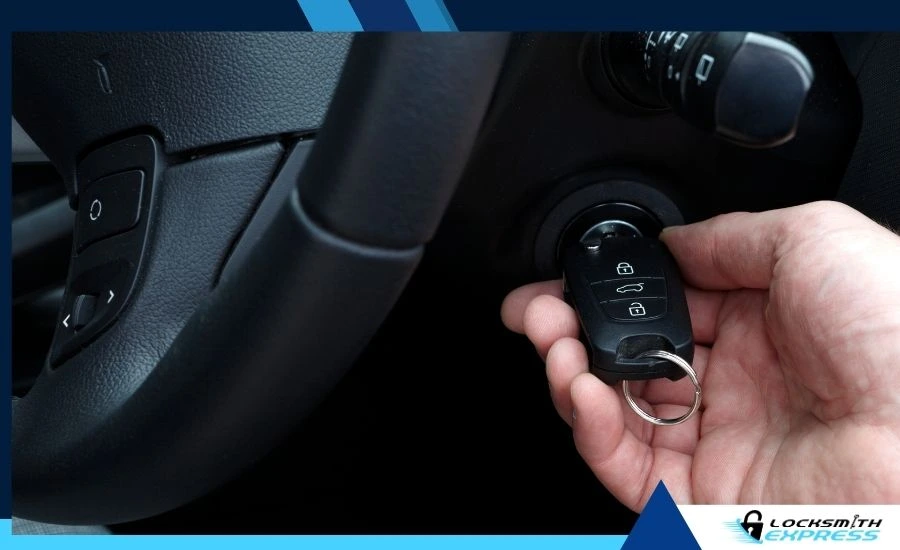
A basic transponder key might not have any buttons. Its passive RFID chip simply tells the car it is safe to start. A remote key fob has buttons to lock or unlock the doors. This part of the key uses a battery. Most modern keys are a combination of a transponder chip and a remote fob.
A smart key, also known as a proximity key, enables push-to-start functionality. You can leave the key in your pocket or purse.
The following table:
| Feature | Basic Transponder Key | Remote Key Fob | Smart Key |
| Starts Car | Yes in ignition | Yes in ignition | Yes push-button |
| Unlocks Doors | Manually | With Buttons | Automatically or Buttons |
| Needs Battery | No chip is passive | Yes for remote buttons | Yes for all functions |
Understanding these differences makes it much easier to identify problems when they arise.
Common Problems and Troubleshooting
Common problems include a failed chip, a dead fob battery, or a worn-out blade. Here's how to tell them apart:
- Failed Transponder Chip: If your car will not start and you see a flashing security light on the dashboard, the key's chip may be damaged. The car's immobilizer is not getting the correct code.
- Dead Fob Battery: If your remote buttons (lock/unlock) stop working even though the key still starts the car, this is not a transponder chip problem. It simply means the battery inside the remote fob is dead and needs to be replaced.
- Worn-Out Metal Blade: A worn-out metal blade can also be the issue. If the key is too worn, it will not turn the lock even if the chip is fine. This can also damage the ignition cylinder itself, which may require you to rekey the car ignition.
When you face one of these issues, you have a few replacement options.
Options for Transponder Key Replacement
You can get a replacement transponder key from an automotive locksmith or your vehicle's dealership.
A dealership can create a new key for your car. This often requires you to bring the vehicle to their location, which may mean towing it if all keys are lost.
A professional automotive locksmith can also provide a replacement. A main benefit is that mobile technicians come to your location. This avoids the need for a tow truck in an "all keys lost" emergency.
Can you program a key yourself?
For 99% of modern cars, the answer is no. Programming requires special testing tools to connect to the car's computer. While some very old cars allowed on-board programming if you had two keys, this feature is no longer available in modern vehicles.
It is also important to know that the service you need depends on whether you still have a working key.
Spare Keys vs. "All Keys Lost" Replacement
Making a spare key is much simpler than replacing all lost keys. If you have a working key, a locksmith can add a new key to the car's computer. This process is called cloning or programming a spare.
If you have no working keys, the situation becomes more challenging. A locksmith must access the car's computer to create a brand new key. This requires clearing the car's memory of the old keys. It is always a good idea to have a spare key made before you lose your last one.
No matter your situation, a professional is ready to help.
Your Professional Key Experts
Transponder keys are a standard part of modern vehicle security. Whether you need a spare key for your car key collection or a new smart key replacement, Locksmith Express can help. Our mobile technicians handle all transponder key programming.
Frequently Asked Questions
Can you bypass a transponder key?
Getting around this system is not easy. The immobilizer is designed to prevent this and requires special tools.
What is the difference between fixed code and rolling code transponders?
Fixed code keys use the same code every time and can be cloned. Rolling code keys use a new code for each start, making them much more secure.
Will a dead car battery erase my transponder key?
No. The key codes are stored in the car's non-volatile memory, which does not need power to hold information.
Can a transponder key be duplicated at a hardware store?
No. A hardware store can only cut the metal blade. They cannot program the chip to communicate with your car's immobilizer.
If my remote buttons are broken, do I need a whole new key?
Not always. If the key still starts the car, the transponder chip is working. You may only need a new battery or a replacement shell for the remote.