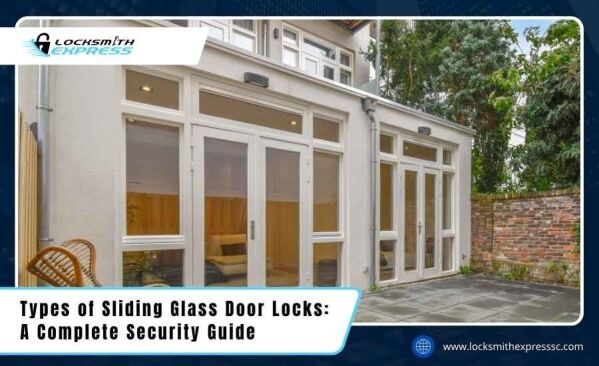
If you've ever looked at the latch on your sliding glass door and wondered if it's actually keeping anyone out, you're asking the right question, especially if you live in North Charleston. The humidity and salt air off the harbor wear down factory hardware faster than they would inland, and that factory latch is often the only thing standing between your patio and the outside. There are several types of sliding glass door locks on the market: mortise locks, hook latches, and keyed cylinders built into the door, plus add-on options like security bars, foot locks, loop locks, and pin locks. Most North Charleston homes only have the most basic one installed. In this guide, we'll walk through the standard locks built into most doors, the secondary locks you can add for real protection, and how to pick the right combination for your home.
- Why Sliding Door Security Matters More in North Charleston
- What are the Main Types of Sliding Glass Door Locks?
- Standard and Internal Locks
- Secondary and Extra Security Locks
- Why the Standard Latch Isn't Enough
- How to Choose the Right Lock for Your Sliding Doors?
- Don't Leave Your Sliding Door as the Weak Link
- Frequently Asked Questions
- What are the different types of sliding glass door locks?
- What is the most secure lock for a sliding patio door?
- How does a double-bolt sliding door lock work?
- Can a locksmith install an auxiliary lock on a sliding glass door?
- Are standard mortise locks on sliding doors easy to bypass?
Why Sliding Door Security Matters More in North Charleston
North Charleston's coastal climate is hard on sliding door hardware in ways inland homes never have to deal with. Salt air and humidity off the harbor corrode factory latches and mortise mechanisms faster, which loosens the fit and makes shimming easier over time. Many neighborhoods here also have an older housing stock, so sliding doors installed decades ago are more likely to have worn tracks and looser alignment than a newer build. And with hurricane season bringing regular evacuations, homes sit empty for days at a stretch, which is exactly when a factory latch alone leaves the patio door as the easiest way in. None of this means you need to replace the door, but it does mean the standard lock deserves a closer look than it would somewhere drier and more inland.
What are the Main Types of Sliding Glass Door Locks?
Sliding door locks generally fall into two groups: the lock that came with the door, and the extra hardware you add on top of it. Knowing the difference helps you figure out what you're actually working with before you decide what to upgrade.
Standard and Internal Locks
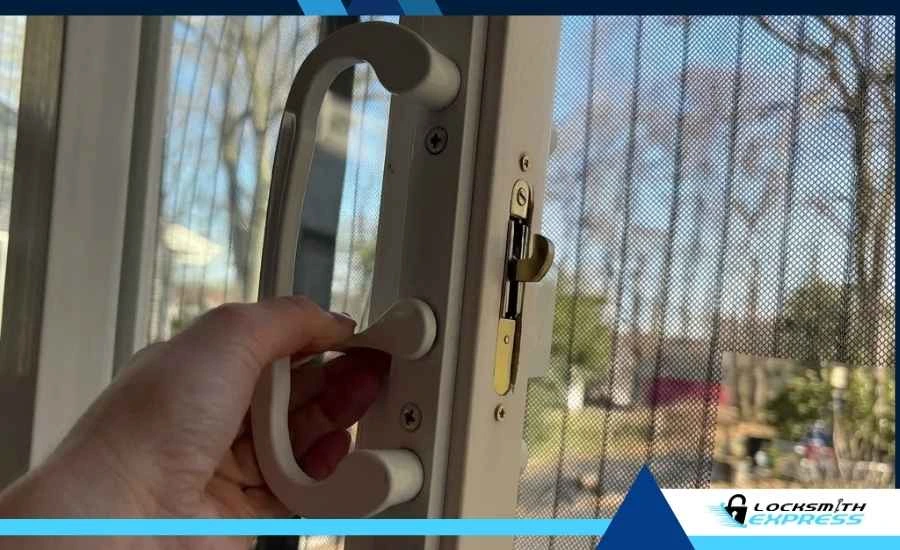
These are the locks built into the door itself, usually as part of the handle or frame. Most sliding doors come with one of the following:
- Mortise Locks: A lock built into a pocket cut directly into the door frame, operated by turning the handle or a small lever.
- Hook Latches: The most common factory latch, using a hook-shaped bolt that catches on the frame when the handle is turned.
- Keyed Cylinders: A lock that requires a key from the outside, often paired with a hook latch or mortise lock for added control over who can open the door.
| Lock Type | Pros | Cons |
| Mortise Locks | Built into the frame, no visible add-on hardware | Can be shimmed if it's the only lock on the door |
| Hook Latches | Simple, comes standard on most doors | Easiest lock to bypass, not meant to stop forced entry |
| Keyed Cylinders | Adds key control from outside | Doesn't stop shimming or lift-out on its own |
Secondary and Extra Security Locks
These are add-on locks installed after the fact, and they're where most of the real security upgrades happen. Common options include:
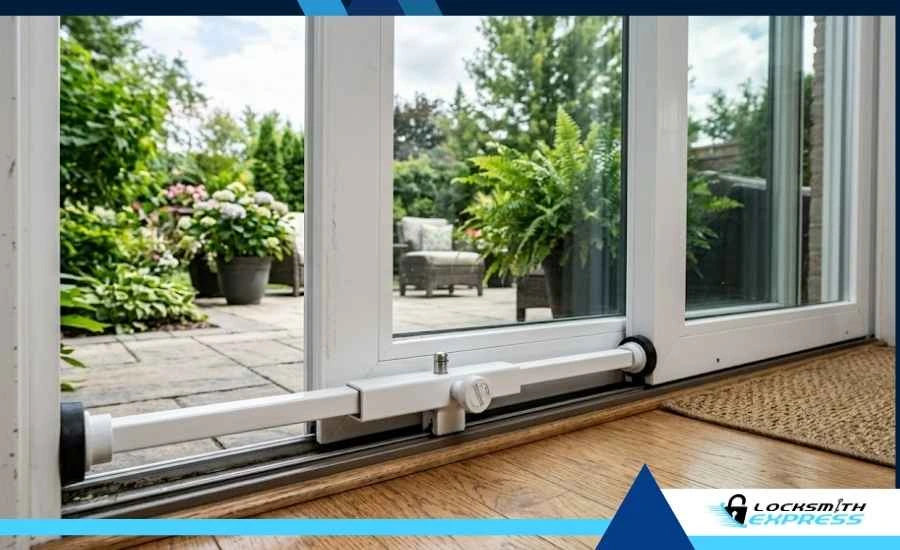
- Security Bars (Telescoping Bars): An adjustable metal bar placed in the door track that physically blocks the door from sliding open.
- Foot/Step-on Locks: A lock mounted to the track that you engage by pressing down with your foot, locking the door in place without touching the handle.
- Loop Locks: A small clamp that attaches to the track and stops the door from sliding past a set point, often used to allow ventilation without opening the door fully.
- Pin Locks (Charley Bars / Bolts): A removable pin or bolt that passes through the door and frame, physically linking the two so the door can't slide even if the main latch fails.
| Lock Type | Pros | Cons |
| Security Bars | Cheap, easy to install and remove | Can be knocked out of place if not fitted well |
| Foot/Step-on Locks | Hands-free, blocks the track directly | Needs to be engaged every time, easy to forget |
| Loop Locks | Good for ventilation, low cost | Minimal security value on its own |
| Pin Locks | Works independently of the main latch | Requires drilling into the frame and door |
Why the Standard Latch Isn't Enough
The latch that comes with most sliding doors was built to keep the door closed, not to stop someone from forcing it open. Two problems show up again and again on doors that only have the factory latch:
- Shimming: A thin tool slipped between the door panels can push the latch bolt back and open the door without ever touching the lock.
- Lift-Out: Many sliding doors, especially older ones, can be lifted up and out of the bottom track from the outside because the top track has more room than the door needs to move.
How to Choose the Right Lock for Your Sliding Doors?
Picking the right lock comes down to knowing which weakness your door actually has and how much effort you want to put into using the lock day to day. Here's what to weigh before you buy anything:
- Check for Play in the Door: Try lifting the door slightly while it's closed. If it moves up in the track, lift-out is your bigger risk, and a foot lock or pin lock will do more for you than another latch.
- Check the Fit of the Latch: If the door feels loose or the latch doesn't sit tight against the frame, shimming is more likely, and a security bar or a second keyed lock closes that gap.
- Think About How Often You'll Use It: A foot lock or pin lock takes an extra step every time you open the door, so be honest about whether you'll actually engage it consistently.
- Layer Two Locks Instead of One: A hook latch alone leaves you exposed. Pairing it with a foot lock or pin lock covers both shimming and lift-out at the same time, which is really what you're after.
- Factor In the Door's Age: Older doors tend to have more track wear and looser alignment, which makes a second lock more of a priority than it would be on a newer, tighter-fitting door.
- Account for Coastal Wear: In North Charleston's humidity and salt air, hardware corrodes faster than it would inland, so inspect your factory latch for looseness or rust more often, especially after storm season.
Don't Leave Your Sliding Door as the Weak Link
The factory latch on a sliding glass door was never designed to stop someone determined to get in, and that gap is worth closing before it becomes a problem. Adding one solid secondary lock, whether that's a foot lock, a pin lock, or a well-fitted security bar, closes most of the risk without much cost or hassle.
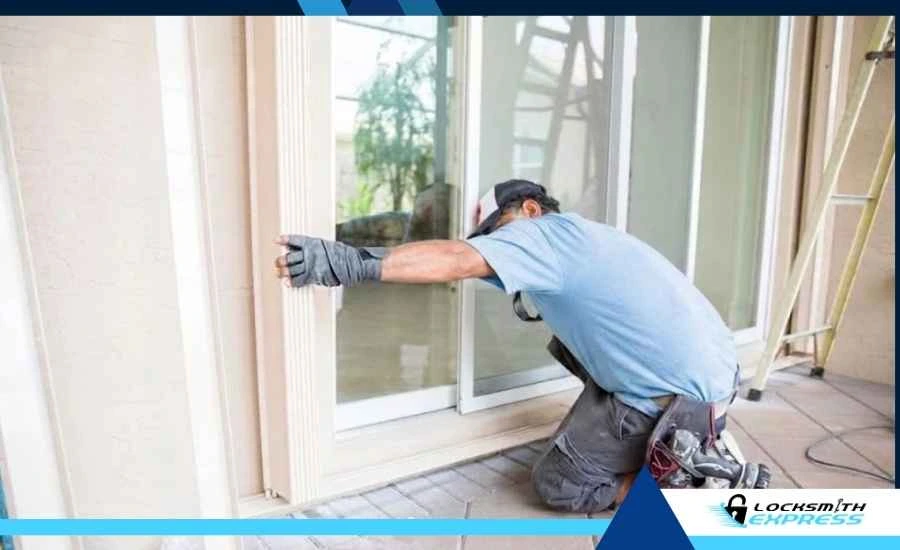
At Locksmith Express, we can help fortify your home's most vulnerable entry point with the right lock. Connect with our advanced locksmith near you to audit your patio tracks, adjust worn mortise alignments, and install high-security auxiliary locks today.
Frequently Asked Questions
What are the different types of sliding glass door locks?
The main types are mortise locks, hook latches, and keyed cylinders built into the door, plus add-on options like security bars, foot locks, loop locks, and pin locks.
What is the most secure lock for a sliding patio door?
No single lock covers everything on its own. Pairing your factory latch with a foot lock or pin lock gives you the strongest protection against both shimming and lift-out.
How does a double-bolt sliding door lock work?
A double-bolt lock uses two separate bolts, one on the door and one on the frame, that lock together when engaged. Splitting the load across two points makes it much harder to force open than a single latch.
Can a locksmith install an auxiliary lock on a sliding glass door?
Yes. Security bars, foot locks, and pin locks can all be added to most existing sliding doors without replacing the door.
Are standard mortise locks on sliding doors easy to bypass?
A basic hook latch is fairly easy to shim from the outside. A mortise lock is a bit tougher, but on its own it still won't stop someone determined to force the door.